
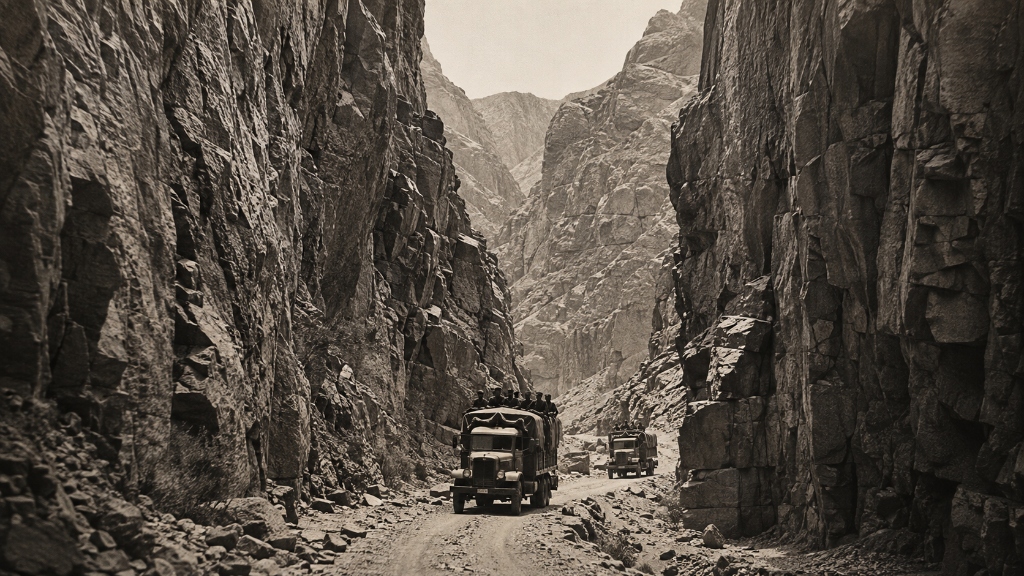
Snaking between the high plateau of Wana and the southern exit of Tank, the infamous Shahur Tangi defile has witnessed some of the fiercest military confrontations in the annals of frontier warfare. Guarded at its eastern approaches by the outpost of Sarwekai, the narrow rocky gorge with its vertical cliff faces formed a natural trap for advancing military convoys.
The first major ambush occurred in April 1921 when tribal fighters struck an imperial column returning from Wana, followed by a second attack three months later where home-made bombs dropped from high cliffs disabled the motor transport before a sudden flash flood in the Shahur Stream inundated the relief forces.
The tribesmen's most celebrated tactical victory took place in April 1937. Led by the renowned Mahsud commander Konia Khan, warriors positioned themselves high on the gorge walls—above the maximum elevation angle of the escorting armored cars' machine guns. Unleashing heavy coordinated fire at dawn, they disabled fifty vehicles, setting lorries ablaze with tracer fire. The battle claimed the lives of fifty-two British and Indian troops, including the convoy commander and senior officers.
In October 1947, during the chaotic post-partition evacuation, a returning contingent of Gurkha and Sikh soldiers was escorted through the dangerous gorge by Afridi Scouts. Despite historic tribal tensions, the Afridi Scouts upheld their tribal code of nang (honor) to protect their charges, repelling a fierce attack and ensuring the safe evacuation of the soldiers.
Traversing the Shahur Tangi in 1993, James W. Spain noted that while the ghosts of past battles still echoed between the towering rock walls, the defile stood as an enduring monument to the courage, strategic ingenuity, and martial heritage of Waziristan.
Sources
- 1.Pathans of the Latter Day — James W. Spain, Chapter 7: Waziristan: Less Dark and Bloody
- 2.The Frontier Scouts — Charles Chenevix Trench