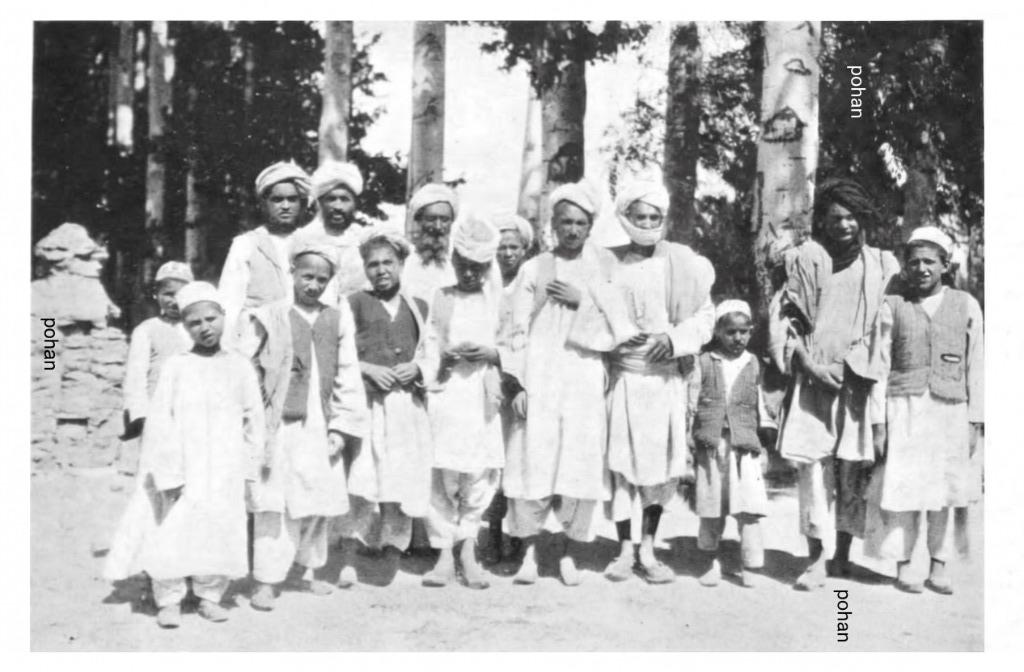
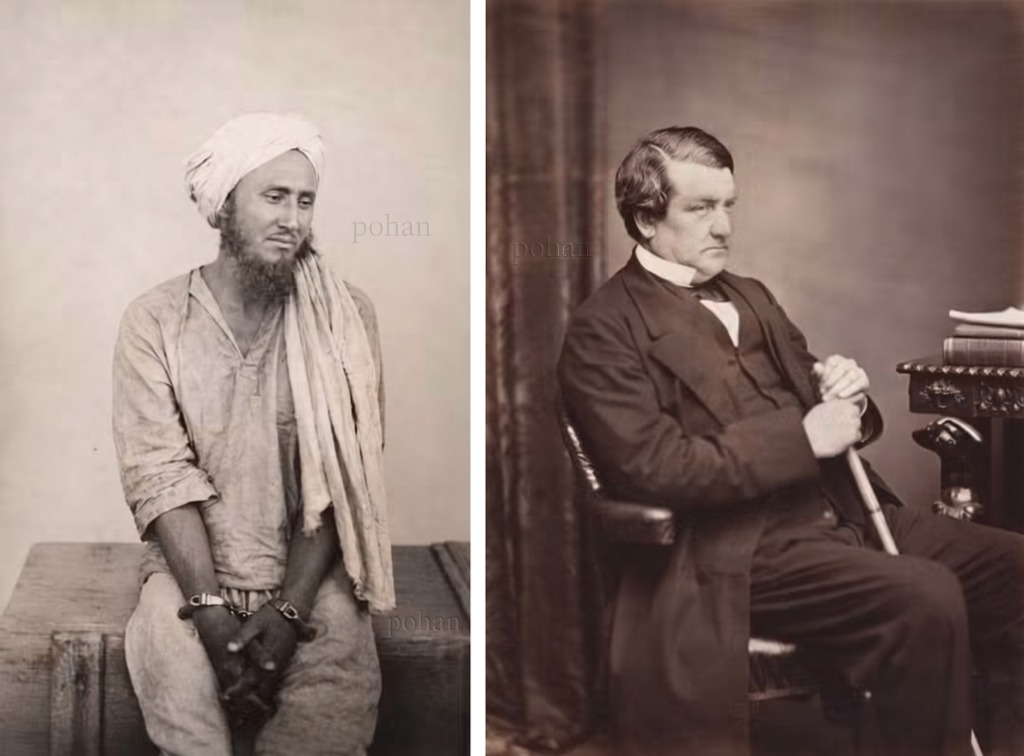
Sher Ali Afridi (also known as Sher Ali or Shere Ali) was a tribesman of the Kuki Khel Afridi tribe from the Tirah region, in what is now Khyber District, Khyber Pakhtunkhwa, Pakistan. His roots lay in the rugged mountains of Rajgal Tirah, along the Pakistan–Afghanistan border. Historical accounts place his origins in the Tirah Valley, with some linking him more specifically to areas near Jamrud and the broader Khyber frontier.
His father's name appears in contemporary records as Wali (or Wullee) Khan. Sher Ali lived in or near villages close to Peshawar, in territory that was then part of the independent tribal areas beyond full British administrative control.
**A Respected Frontier Soldier:**
During the mid-19th century, men from frontier communities often earned reputations for courage and loyalty while serving in the British Indian forces. Sher Ali himself served as a cavalry trooper and policeman. He worked under British officers in Peshawar, including as a mounted orderly for figures such as Reynell Taylor and others associated with the Commissioner's establishment.
For his distinguished service—accounts mention action against Yusufzai groups and general good conduct—he received rewards, including a horse, a pistol or revolver, and a certificate of merit.
British sources later described him as a “fearless soldier” of powerful build, popular among European officers and trusted enough to care for children in one household.
He had previously been pardoned for killing a robber who had allegedly attempted to steal his cattle and assault his wife—an incident that some accounts associate with local codes of honour.
**The Sentence That Changed His Life:**
In 1867, Sher Ali killed a man named Hyder (also recorded as Haider or Hyder Khan), described in various sources as an enemy or relative, sometimes identified as a tarbur—a cousin and rival within Pashtun customary notions of inheritance and family feuds.
The killing took place in broad daylight in Peshawar, within British jurisdiction.
Historical accounts offer differing explanations for the motive. Some cite a long-standing family or clan feud, while others connect the incident to jealousy, personal rivalry, or the defence of family honour. One version refers to the alleged dishonour or molestation of a female relative.
Sher Ali pleaded innocence or maintained that his actions were justified under tribal custom, particularly the principles of Pashtunwali. However, a British court sentenced him to death on 2 April 1867. On appeal, the sentence was reduced to transportation for life to the Andaman Islands, the notorious penal colony known as Kala Pani.
For Sher Ali and many of his tribesmen, this outcome represented a profound injustice. Coming from an area with its own tribal systems of authority, he may have expected the dispute to be resolved through a jirga and customary law rather than through British legal institutions.
The conviction brought disgrace and shattered the standing he had previously earned as a respected frontier fighter and trusted orderly.
**From Kala Pani to Revenge:**
Sher Ali spent approximately two to three years as a convict at Port Blair, including periods associated with Viper Island. His good conduct reportedly led to his assignment as a barber, a position that gave him access to a blade.
During his imprisonment, he carefully planned an act of revenge against senior British officials, whom he held responsible for what he considered an unjust sentence.
On 8 February 1872, Viceroy Richard Bourke, 6th Earl of Mayo, visited the penal settlement to inspect the colony. That evening, as Lord Mayo returned from viewing the sunset at Mount Harriet (now Mount Manipur) toward his boat, Sher Ali emerged from the darkness and attacked him with a knife.
Lord Mayo was stabbed in the neck and shoulder and died from his injuries at the scene.
Sher Ali made no attempt to escape and was immediately overpowered.
**“I Have Done It Alone, With the Help of Allah”**
During his interrogation, reportedly conducted aboard the ship Glasgow or in subsequent proceedings, Sher Ali remained calm and defiant.
He stated that he had acted alone, assisted only by God (Allah), and that he had no human accomplices. He described his motive as revenge for what he believed was an unjust sentence.
According to accounts, he had intended to kill a high-ranking British official and would have acted against any senior figure he encountered.
Some British officials and later writers labelled him a jihadi, Wahhabi, or religious fanatic, partly because of the presence of other Muslim political prisoners and the wider context of Wahhabi-related unrest and frontier tensions.
However, Sher Ali himself denied involvement in an organised religious or political conspiracy. British investigations did not establish a proven connection to a wider plot.
The historical evidence therefore leaves room for different interpretations of his motives, including personal revenge, tribal notions of justice, and the wider political tensions of colonial India.
**The Final Act:**
Sher Ali was tried swiftly through military proceedings and sentenced to death. On 11 March 1872, he was hanged at Viper Island.
He reportedly faced the gallows without fear, even kissing the rope and affirming that he had long envisioned such an end. He was approximately 30 years old.
**A Moment That Shocked the British Empire:**
The assassination of Lord Mayo, the highest British official in India after the Queen, sent shockwaves throughout the British Empire.
It remains the only successful assassination of a Governor-General or Viceroy of India during the British Raj.
Sher Ali Afridi's story reflects the complex collision between British colonial law and the customary values of the Pashtun frontier, including badal (revenge), family honour, and tribal justice.
While some interpretations place his actions within broader anti-colonial resistance narratives, others understand them primarily as an act of personal revenge arising from a perceived injustice.
His life and death remain a subject of historical discussion, particularly concerning the relationship between colonial authority, customary law, and the honour codes of the frontier.
Sources
- 1.The Assassination of Lord Mayo: The "First" Jihad? — Dr. Helen James
- 2.Concerning John's Indian Affairs — Robert Henry Elliot