
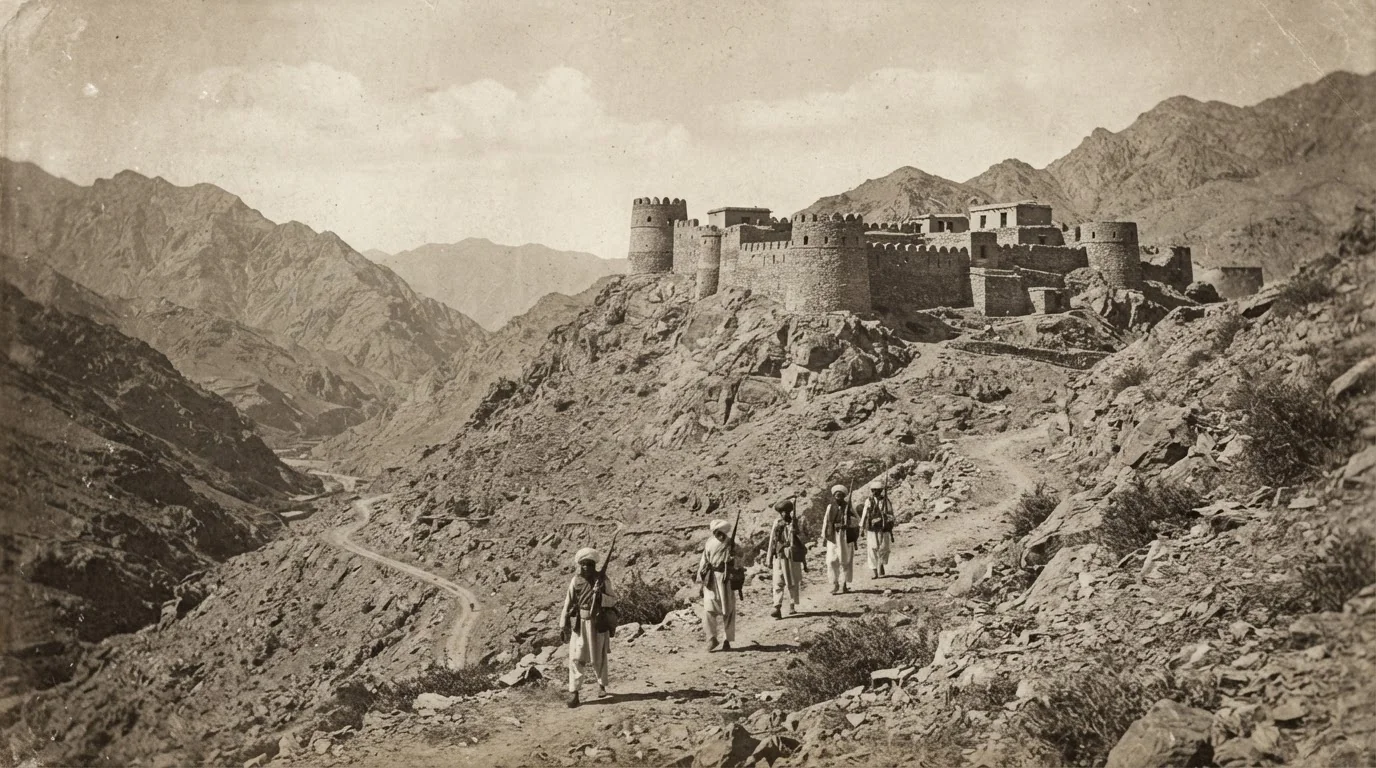
In the mid-1930s, the Torikhel Wazir settlement of Ipi produced one of the most formidable anti-colonial leaders of twentieth-century Asia: Haji Mirza Ali Khan, known in British military records as the Faqir of Ipi.
Establishing his headquarters in the inaccessible caves of Gurwek near the Afghan frontier, the Faqir created an independent administrative and military redoubt. He published proclamations, coordinated multi-tribal lashkars spanning Mahsuds, Wazirs, and Dawars, and established arms-repair workshops.
Despite continuous RAF aerial bombardments and the deployment of two full divisions of the British Indian Army, the Gurwek stronghold was never captured. Official intelligence files describe him not merely as a religious figure, but as an astute military strategist who leveraged tribal geography and customary alliances.
Sources
- 1.Official History of Operations on the N.W. Frontier of India 1936–37Manager of Publications, Delhi
- 2.Intelligence Summaries on the Faqir of Ipi (1936–1947)India Office Records — L/PS/12 series
- 3.The Pathans: 550 B.C.–A.D. 1957 — Sir Olaf Caroe